What is a Temple Night?
A Temple Night is a space for coming home to yourself, exploring conscious sexuality, and practicing authentic connection in community.
It’s a playground for radical honesty, self-discovery, pleasure, and transformation. We don’t come to find someone or get something. We come to meet ourselves, bringing all of who we are into a space where something unexpected can unfold.- 1. A Substance-Free Experience
- 2. A Playground for Radical Honesty and Transparency
- 3. A Sex-Positive Space Where Nothing Has to Happen
- 4. A Space for Embodiment — Beyond the Mind
- 5. A Place to Reclaim Your Sovereignty
- 6. A Space to Practice Consent and Conscious Intimacy
- 7. An Inclusive Space Without Assumptions
- 8. Freedom Through Boundaries
- 9. A Community We Co-Create
- 10. A Space for Darkness as Well as Light
- 11. A Sacred Space Without Religion
- 12. A Place to Meet Yourself, Not to Find Someone
- 13. Sovereignty, Synergy and Sacredness
01
A Substance-Free Experience
No drugs. No alcohol. No numbing.
We show up with all of who we are.
This is a conscious choice to meet ourselves and each other without hiding or escaping. To feel what’s alive, even when it’s uncomfortable, unfamiliar, or challenging.
For many of us, this is already a radical departure from how we were brought up.
02
A Playground for Radical Honesty and Transparency
Temple Nights invite us to own our truth, our desires, our boundaries, and our emotions.
We practice letting go of irony, sarcasm, and the many layers we use to protect ourselves from real connection.
Instead, we experiment with speaking directly, vulnerably, and authentically.
We learn to say what is alive in us, without demanding that anyone else do anything with it.
03
A Sex-Positive Space Where Nothing Has to Happen
All of you is welcome.
Your sexuality, desires, boundaries, emotions, curiosity, and uncertainty.
Sex-positive doesn’t mean sex is expected. It means sexuality can exist without shame, while consent, freedom, and personal choice remain essential.
You don’t have to touch anyone. You don’t have to undress. You don’t have to participate in anything you don’t want to.
You don’t even have to say, do, or think anything in particular.
You are welcome simply to be.
04
A Space for Embodiment — Beyond the Mind
We live in a world where the mind is king.
Where thinking, analyzing, understanding, and explaining often take priority over feeling and sensing.
In temple, we challenge this.
We bring our consciousness, our thoughts, and our ideas, but we begin by letting go of the need to understand everything.
Through breath, sound, and movement, we come home to our bodies.
We rediscover what’s alive beneath our thoughts. Our sensations, emotions, impulses, desires, and the parts of ourselves we may have forgotten or learned to suppress.
We practice listening to the intelligence of the body, not just the mind.
And from that embodied place, we bring consciousness back in. We become curious about what we’re sensing, what it means to us, and how we want to express it or bring it into connection with others.
It’s not about abandoning the mind. It’s about remembering that we are so much more than our thoughts.
Temple is a place to remember all of who we are — body, mind, emotions, and everything in between.
05
A Place to Reclaim Your Sovereignty
Temple Nights are about coming home to yourself.
Picking up the pieces you’ve lost along the way, or perhaps never fully acknowledged.
Your desires. Your boundaries. Your power. Your vulnerability. Your capacity to feel.
Other people can become mirrors that help us discover these pieces.
We may notice attraction, judgment, resistance, admiration, or projections. Rather than making these experiences about the other person, we practice taking ownership and becoming curious about what they reveal within ourselves.
We don’t come to heal others.
We come to heal ourselves in community, through love.
06
A Space to Practice Consent and Conscious Intimacy
We learn and practice what many of us were never taught.
How do we speak about attraction? How do we communicate desires and boundaries? How do we explore physical, energetic, or sexual connection with clarity?
We practice asking permission before engaging.
“May I share a desire with you?”
“Are you open to hearing some words of appreciation?”
“I’ve noticed a projection towards you. Would you be open to hearing about it?”
“I feel attracted to you. Are you open to exploring what’s alive between us?”
We practice conversations about relationships, desires, boundaries, sexual safety, meaning, and trauma responses.
Consent is not a one-time yes. It’s an ongoing practice of listening, speaking, sensing, and respecting ourselves and others.
07
An Inclusive Space Without Assumptions
Temple Nights welcome people across genders, identities, sexual orientations, and adult ages.
We don’t presume to know another person’s identity, desires, boundaries, or experience.
And this is challenging.
We all carry assumptions, judgments, and projections.
In temple, we practice noticing them, owning them, and discovering what they can teach us about ourselves.
The more we take responsibility for our own inner world, the more freely we can meet others through love.
08
Freedom Through Boundaries
A Temple Night is both a free space and a carefully held container.
There is a beginning and an end. There are agreements, practices, and boundaries that everyone commits to before entering.
Some may initially experience these as restrictions.
But boundaries are what make freedom possible.
When we know the agreements, when we can communicate our desires, and when we trust that our boundaries will be respected, we can relax and open up.
Without boundaries, everything is potentially on the table, and genuine freedom becomes difficult.
Within clear boundaries, we can explore, play, surrender, and unfold.

09
A Community We Co-Create
Temple Nights are not experiences we consume.
We don’t simply arrive expecting someone else to entertain, serve, or give us something.
We come to contribute.
We bring our full sovereignty while remaining aware of the energy and needs of the community.
Sometimes this means listening or being silent. Sometimes it means daring to speak, move, or express something that is alive within us.
Just because nobody is speaking doesn’t mean something shouldn’t be spoken.
What wants to come through you may be exactly what someone else needs to witness.
We practice bringing ourselves into the space while respecting the freedom and boundaries of everyone around us.
10
A Space for Darkness as Well as Light
Temple Nights are sometimes imagined as experiences of love and light.
But temples are also spaces for darkness.
For grief, anger, fear, taboo, deep desires, rituals of death and letting go, and the emotions we’ve carried or suppressed for years.
There may be tears, laughter, pleasure, pain, stillness, or powerful release.
We don’t decide in advance which parts of ourselves are welcome.
But the more charged an exploration is, the more important clear boundaries, transparency, and mutual consent become.
We explore our own darkness without making others responsible for carrying or resolving it.
11
A Sacred Space Without Religion
The words temple and sacred don’t refer to any particular religion.
They invite a different way of showing up.
With reverence. With integrity. With devotion. With respect for ourselves, each other, and what we create together.
We live in a world where so much is consumed, used, and discarded.
Temple invites us to step out of that mindset.
We don’t come only to take. We come to give, to honor, to let go, and sometimes to sacrifice an old part of ourselves.
We can worship life, love, our bodies, and the mystery of connection without belonging to any religious tradition.
The sacred is not something we have to believe in.
It’s something we may experience.
12
A Place to Meet Yourself, Not to Find Someone
We don’t enter temple expecting to get something from another person.
We enter to discover what’s alive within ourselves.
Sometimes we meet someone who shares a desire, and something beautiful can unfold together.
Sometimes we discover that what we were seeking from another person is actually something we need to reclaim within ourselves.
And sometimes the most profound meeting happens alone.
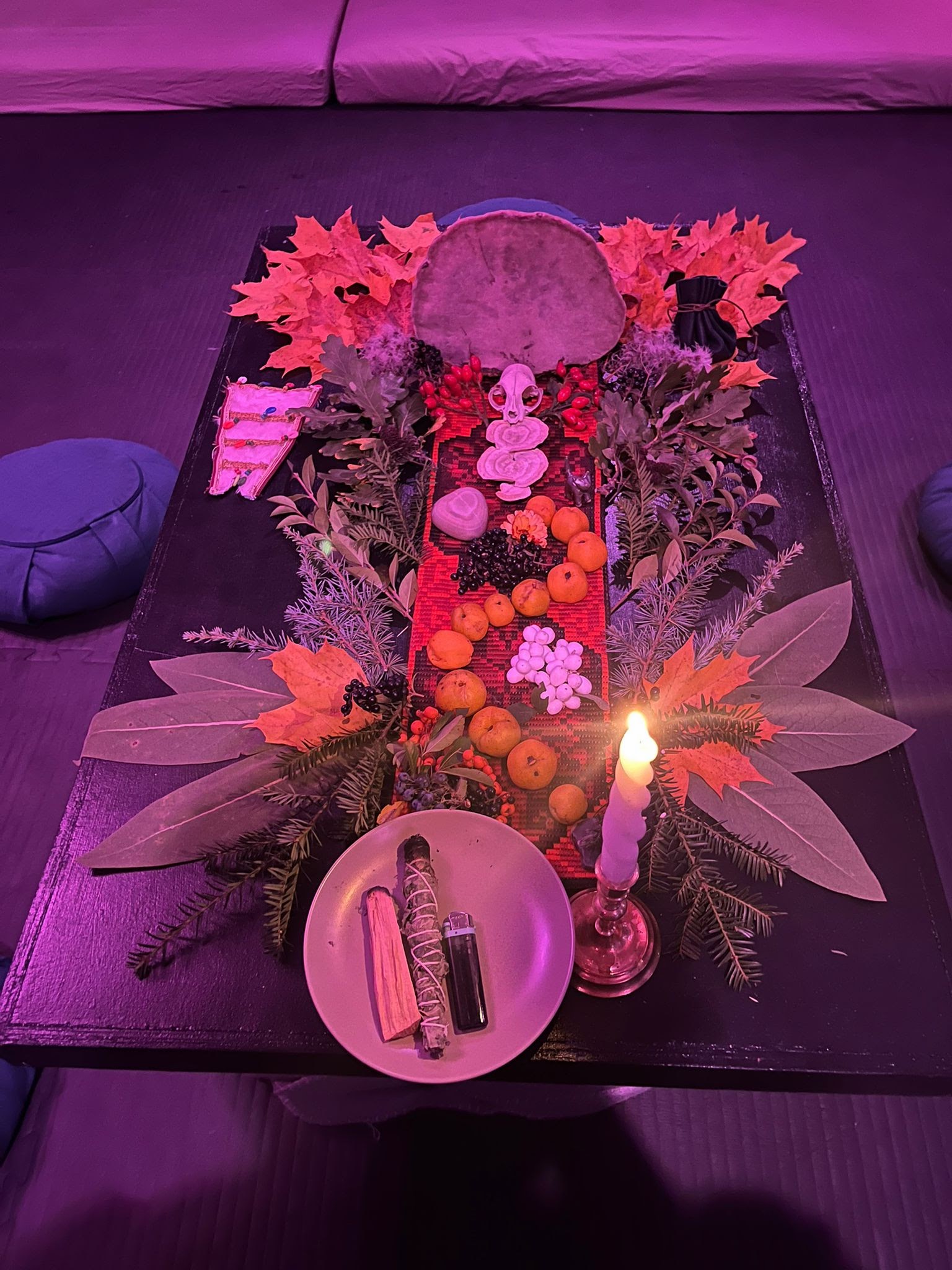
Sitting silently at the altar. Dancing. Breathing. Moving your energy. Making love to yourself, energetically, physically, or sexually.
There is no hierarchy of experiences.
Nothing has to happen for your temple journey to be meaningful.
Temple Nights Are a Practice for Life
We come to remember what it means to be fully human. To live with greater freedom, honesty, pleasure, responsibility, and love.
And to bring what we learn beyond the temple, into our relationships, our families, our communities, and the generations that follow.